October 10, 2026


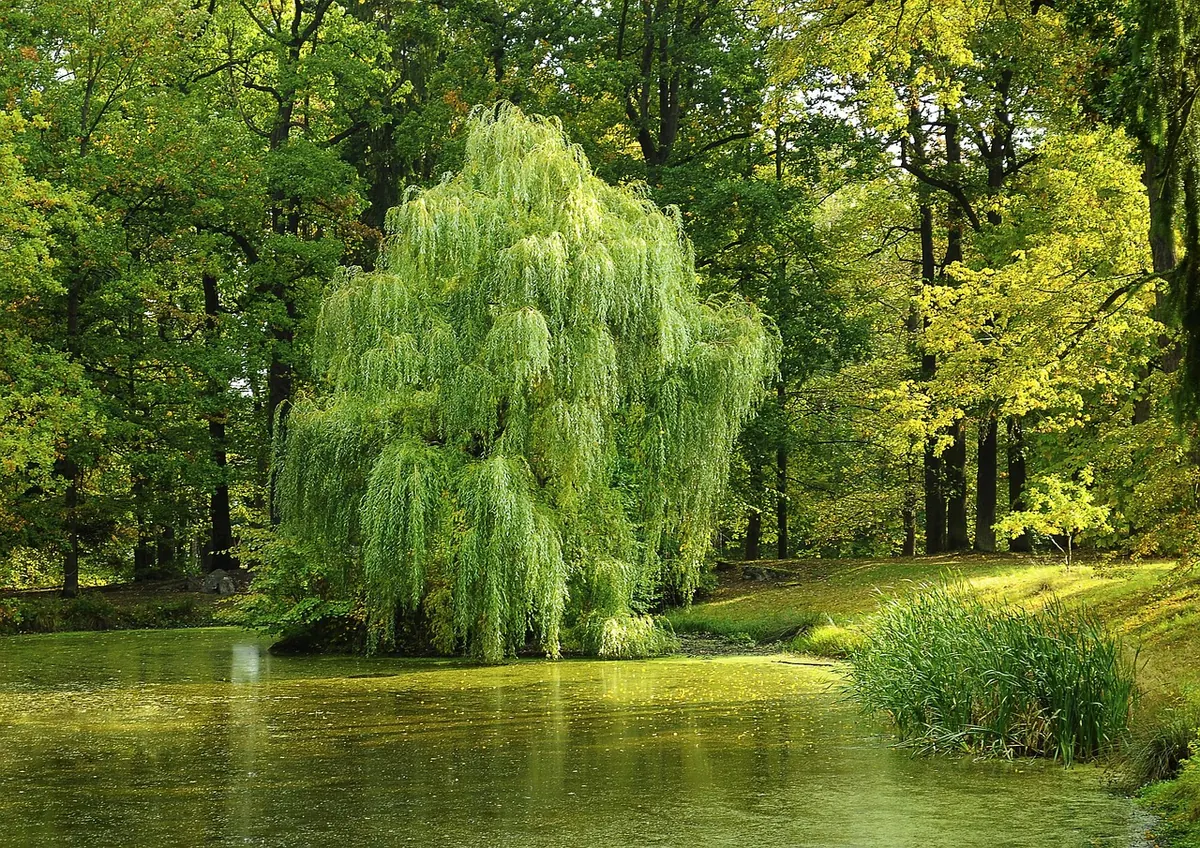
Willow is generous: fast-growing, beautiful, and useful on wet ground. It is also one of the thirstiest trees you can plant. Its roots will travel astonishing distances in search of moisture, and that same appetite that makes willow a champion of boggy corners, pond edges and riverbank stabilisation can turn it into a serious liability within a few metres of a foundation, a sewer pipe or a septic drainfield. If you are standing in a garden centre wondering whether the gap between the sapling in your hand and your house is wide enough, the honest answer is usually: not yet measured against the right tree. You need to judge the space against the mature willow, not the one-metre whip you are about to buy.
This guide sets out practical planting distances for willow, explains why those numbers shift with species, soil and drainage, and offers workable strategies if you have already planted one too close.
Willows are pioneer trees of wet ground. They evolved to colonise freshly exposed riverbanks, gravel bars and floodplain silts, where water is plentiful but competition is fierce and the ground can shift. The result is a root system built for rapid, wide exploration rather than deep, tidy anchorage.
Three traits make willow roots particularly troublesome near buildings and drainage:
Root spread in willows commonly runs to one and a half to three times the canopy radius, and in compacted, dry or free-draining soil it can be greater still. Where a dependable water source exists — a leaking pipe, a soakaway, a drainfield — the roots will concentrate there regardless of how far away it is.
A willow will always find water. The only question is whose water it finds.
The figures below assume a tree left to reach its natural size, in average garden soil. They are minimums, not targets. More space is always safer.
Never plant any willow directly over a drain, a service run, a soakaway, a septic tank or a leach field, however small the plant looks on the day you buy it.
Older drains are the greatest concern. Clay, pitch-fibre and cast-iron pipes rely on rigid joints that crack and separate as ground moves, and once a willow root finds a gap of a millimetre it will exploit it. Inside the pipe, fine roots branch into a mat that catches grease, paper and silt until the drain blocks — usually at the worst possible moment.
Modern plastic drainage is more forgiving, because flexible joints and sealed couplings resist root entry far better. That does not make it immune. Ground movement, poor bedding, rodent damage and later excavations all create openings.
As a working rule:
If you are unsure where the pipes run, order a CCTV drain survey before planting. It costs far less than a relining job, and it also tells you whether roots are already present from a neighbouring tree.
On shrinkable clay soils, willow is in the highest category of water demand, alongside poplar, eucalyptus and oak. As the tree extracts moisture, the clay shrinks; the ground settles unevenly; and foundations that were perfectly adequate for decades begin to move. Surveyors often use a rule of thumb that a high water demand tree should be planted at a distance of about 1.25 times its mature height from a building on shrinkable clay. For a weeping willow expected to reach 18 metres, that is a separation of over 22 metres — which explains why so few suburban gardens can accommodate one safely.
On sand, gravel or chalk, with a deep water table, the subsidence risk is much lower. It is not zero. Roots still seek out leaking gutters, downpipe discharges and cracked land drains beside the house, and those wet zones become highways straight to the foundations.
One further caution: removing a large willow can cause the opposite problem. As the soil re-wets and swells, it can lift foundations — a process called heave. Never fell or heavily prune a mature willow near a building without taking professional advice first.
Distance alone does not decide how far willow roots will travel. Site conditions do.
In short: plant willow where water is abundant, and its roots become a manageable neighbour. Plant it on dry ground near services, and you are inviting trouble.
If the position you have in mind is damp but close to the house, willow may simply be the wrong tree. Consider instead:
Sometimes the willow is non-negotiable: it is already there, it is valued, or the wet corner genuinely needs one. In that case, work through these measures.
If a willow is already close to the house, these symptoms deserve prompt attention:
Do not cut roots out yourself. Severing structural roots can destabilise the tree and, in the case of willow, often stimulates vigorous regrowth. Instead, commission a drain survey if pipework is suspected, and consult a structural engineer and a qualified arboriculturist before any major pruning or removal.
In many countries, including the UK, you can be held responsible for damage caused by your tree's roots, even if the tree was planted long before you arrived. If a neighbour's drain or foundation is affected, the claim usually falls on the tree owner. Check whether the tree is covered by a Tree Preservation Order or sits in a conservation area before doing any work, and talk to your water company before planting near a mains supply.
Willow rewards a generous site. Give it space, water and a job to do at the bottom of the garden, and it will be one of the most beautiful and useful trees you can grow. Give it a tight corner beside the house, and you will spend the next twenty years paying for it.
Photo: Erik_Karits / Pixabay

Your guide to growing and using willow.
Copyright © 2026 Willow Guide. All rights reserved. Willow Guide.